
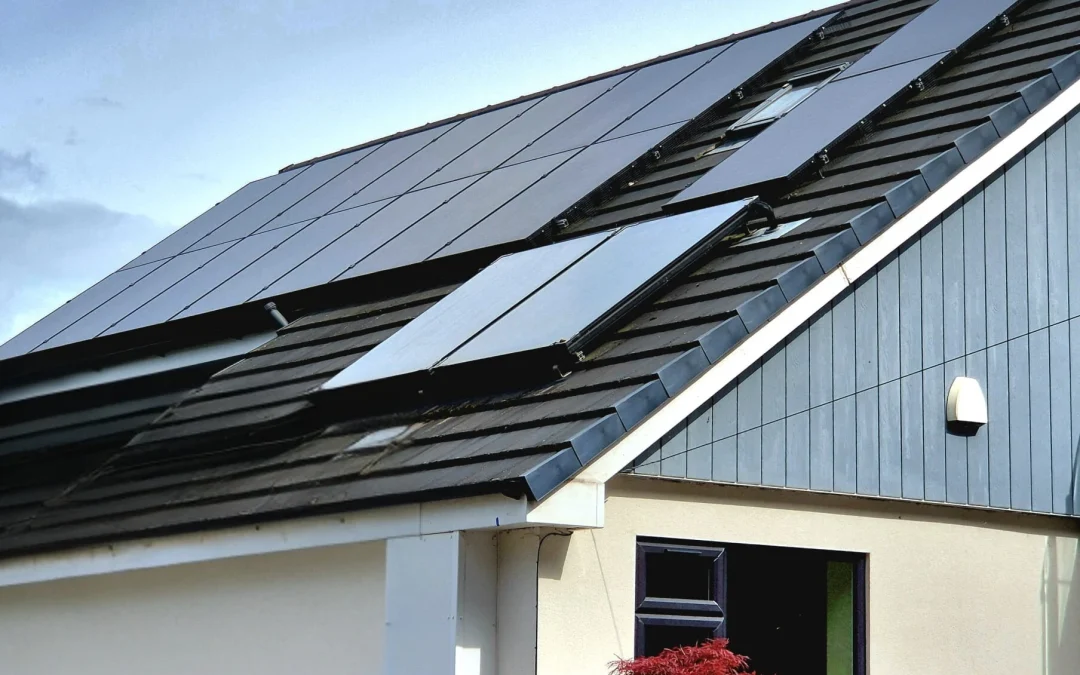
Solar panels are a fantastic way of harnessing cleaner, renewable energy from the sun to power your home, and in turn help reduce your energy bills. If you live in one of Bath’s conservation areas or in a listed building, you may be unsure whether you’ll need planning permission to install a solar PV system. We’re here to answer your questions and help you make the switch to solar energy in Bath.
In this guide:
- The short answer
- Conservation area vs listed building
- Bath’s conservation areas
- What BANES planning officers look for
- Where solar panels usually get approved
- What to prepare before you apply
- FAQs
The Short Answer: Yes, But You’ll Need Consent
As part of their commitment to tackling climate change, Bath and North East Somerset Council encourage homeowners to look into sustainable energy solutions such as solar PV. However, because of Bath’s World Heritage Site status and its number of listed buildings, it’s important for homeowners to check whether planning permission is required before installing a solar PV system.
Conservation Area vs Listed Building: Why the Difference Matters
What Permitted Development Allows in a Conservation Area
Permitted development is a term used by central Government to cover certain minor building changes that don’t require planning permission at all, because they are low impact and stay within fixed rules on size and position, for example not projecting more than 0.2m from a pitched roof. Most solar panel installations fall under permitted development, which is why many installations can go ahead without planning permission.
However, in a conservation area such as Bath, an additional rule applies on top of the permitted development requirements: solar panels cannot be fitted to a roof, balcony or wall that faces a public road or path.
If your solar PV system on your house in Bath is:
- Rear facing and doesn’t overlook a public highway (road or path)
- Within the national size and projection limits
- Not within a scheduled monument’s curtilage
- Not fitted onto a listed building
- Not fitted onto a flat or maisonette
it is likely your installation will count as permitted development and won’t need planning permission. However, local authorities can amend their rules at any time, so always check whether permission is required before going ahead. The Planning Portal’s guidance on solar panels is a good place to start.
Why Listed Building Consent Is Non-Negotiable
Listed building consent is a separate legal requirement from planning permission and is assessed under different legislation. So if you receive planning permission, that does not mean you’ve automatically received listed building consent too. You must treat them separately and apply for them separately.
Listed building consent exists to protect a building’s special architectural or historic interest, both inside and out. It applies regardless of the visibility or position of the solar PV system on your listed property in Bath. It also applies to the curtilage of the property, which broadly means the “outskirts”, such as outbuildings, garages or other structures within the same property boundary.
Permitted development does not apply to listed buildings at all, which means every solar PV installation must be formally applied for. Going ahead with an installation without listed building consent is treated more seriously than a simple planning breach and carries serious consequences.
Every application is assessed case by case, so even if your neighbour in a listed building has had a solar PV system refused, that doesn’t mean you will too.
A Change on the Horizon: Bath’s Proposed Local Listed Building Consent Order
Bath and North East Somerset Council are currently developing a new local order that could allow solar panels to be fitted on Grade I, Grade II* and Grade II listed buildings without individual consent, if they are hidden inside the inner valley of a classic Georgian M-shaped roof. There is no launch date for this yet, so standard listed building consent is still required. We hope to see the council adopt it in the future.
Bath’s 35 Conservation Areas and What They Mean for Your Application
There are 35 conservation areas across the whole Bath and North East Somerset district, with the vast majority of the city of Bath covered by one large Bath Conservation Area. Because of its size, the council divides this into distinct character areas for local planning purposes, including:
- City Centre
- Bathwick
- Bear Flat and Oldfield Park
- Beechen Cliff and Alexandra Park
- Brassmill Lane, Locksbrook and Western Riverside
- Combe Down
- Entry Hill, Perrymead and Prior Park
- North Road and Cleveland Walk
- Pulteney Road
- Twerton, Whiteway, Southdown and Moorlands
- Widcombe and Kennet and Avon Canal
You can check specific boundaries, exact designations and interactive maps using the council’s Find Conservation Areas tool.
How Bath’s Character Areas Could Affect Your Solar PV Application
While the legal planning rules and core restrictions don’t differ from one character area to another, and all sit under the overarching Bath city-wide conservation area, the judgement on a planning application can vary. This can include design and aesthetics. For example, a contemporary design could be accepted in Brassmill Lane, Locksbrook and Western Riverside, whereas it could be rejected completely in the city centre.
How does this tie into solar PV? It depends where your property is. Your solar PV system might be scrutinised differently in the city centre, because character appraisals there prioritise preserving uninterrupted historic Georgian rooflines. In hillside areas like Beechen Cliff and Alexandra Park, planners will assess whether your solar panels disrupt panoramic views from public viewpoints.
None of this rules solar out across Bath. It just means the right approach depends on your specific street, and it’s often a case of tweaking panel choice or position. Choosing a local installer such as Sustain Heating and Renewables means you benefit from the local knowledge that makes the difference between a smooth application and a rejected one.
What BANES Planning Officers Actually Look For
Bath and North East Somerset Council are dedicated to preserving the historical integrity and character of Bath and the surrounding areas, but they are also keen to help homeowners upgrade their historic homes with cleaner energy systems such as solar PV. Here are the key things planning officers look for when reviewing applications for solar PV systems:
Visual impact: panels should generally not be visible in short or medium distance views, and should blend in (in colour and finish) when seen from further away. Ideally, this means solar panels are placed on a rear roof slope, although there is no specific distance or angle given.
Impact on historic fabric: making sure the existing roof structure can take the weight of the new solar PV system, and whether any damage or alterations to historic materials will occur when the panels are fixed.
Evidence from the applicant: specific evidence that the applicant has taken as many steps as possible to preserve the historic integrity of the home and has considered all alternative locations.
Case-by-case assessment: rather than a fixed rule book, each application is assessed individually against the World Heritage Site-wide tests.
Where Solar Panels Usually Get Approved on Listed Buildings
Rear-Facing Roofs and Panel Choice
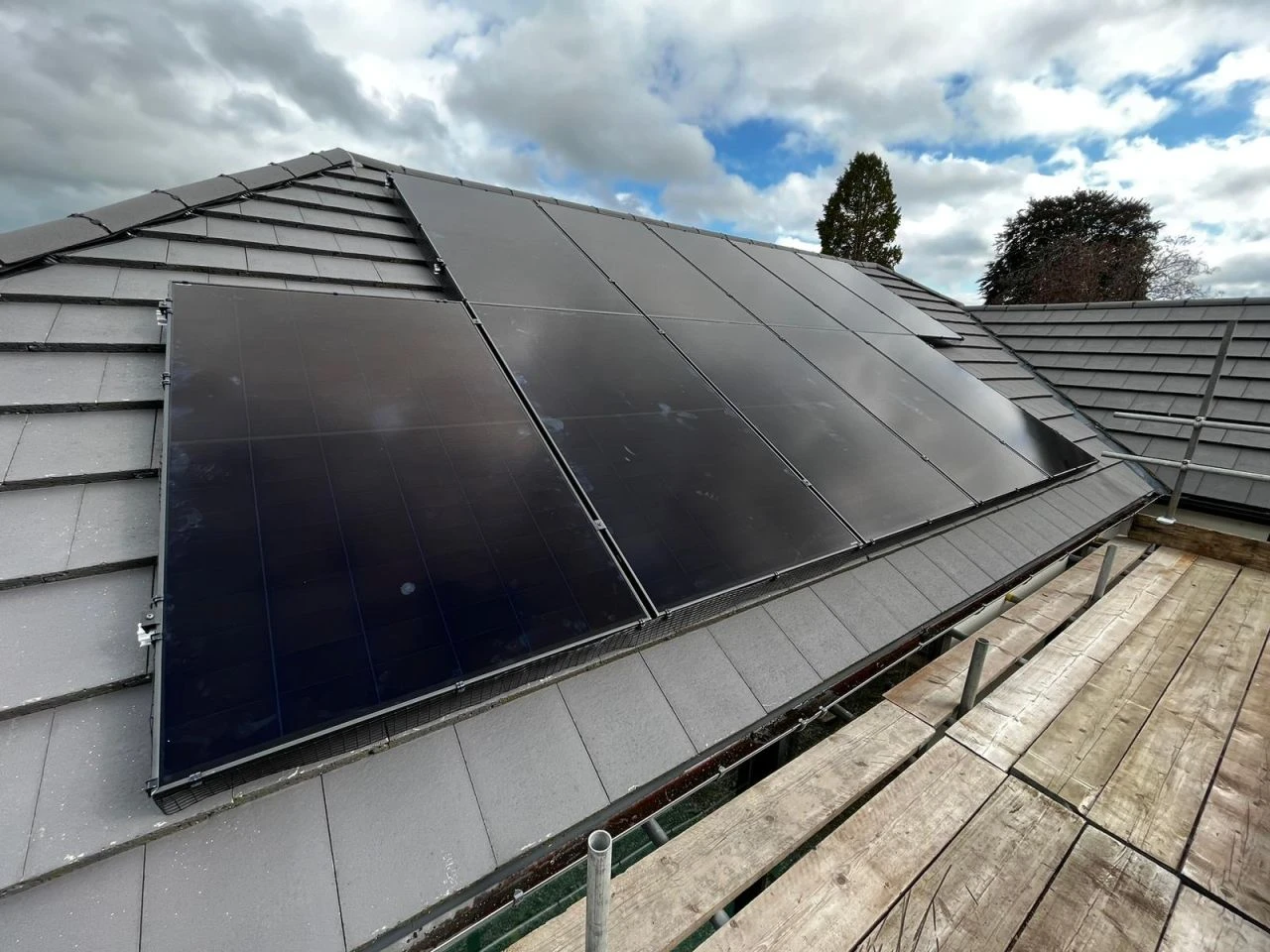
As with the permitted development rules in conservation areas, solar panels on listed buildings are usually expected to go on the rear-facing roof of the property. Fitting panels on a front-facing but partly hidden roof slope may be possible, but it is one of the hardest locations to get approved and is rarely successful.
Choosing dark, anti-reflective panels that blend into the existing roof will also reduce glare and visibility, helping your planning application. You can find out more in our quick guide: is my roof suitable for solar panels?
Ground-Mounted Solar: A Great Option for Listed Buildings
Historic England presents ground-mounted solar as the best renewable energy option for listed buildings. Placing the array on the ground significantly reduces the risk of harming the historic fabric, as the roof isn’t touched at all.
Solar Tiles and In-Roof Alternatives
Interestingly, standard bolt-on panels are often preferred over integrated in-roof solar tiles. This is because bolt-on panels can be unscrewed and removed later, providing the reversibility that planners look for. In-roof tiles that replace the actual roof covering rarely replicate the look of real slate or tile, and tend to wear out faster than the roof material they replace.
What to Prepare Before You Apply for Planning Permission for Solar in Bath
Preparing an application can feel overwhelming, so here is a quick overview of the key things to consider first, whether your home in Bath is listed or not:
- Check your property’s exact status using Bath and North East Somerset Council’s interactive planning constraints map. This will confirm whether your property is listed, which conservation area it sits in, and any tree preservation orders or other designations.
- Look through previous planning applications for your property. A previous condition on the property could affect your new application.
- Confirm whether a full application is needed, rather than assuming, by using the Planning Portal to check whether permitted development applies.
- Consider a pre-application enquiry with the council.
- Collate key evidence such as alternative panel locations and technologies you’ve considered, mitigation measures and full manufacturer product specifications.
- If your property is listed, you’ll also need a Heritage Statement, a structural survey, a biodiversity and ecology assessment, and a specific description of the retrofit works.
Working With an Installer Who Knows Bath’s Rules
Getting it right first time matters more in Bath than almost anywhere else, saving you lost time and duplicated paperwork. Look for an MCS-certified installer who understands how Bath and North East Somerset Council really assess applications, not just an installer who can fit a panel.
We’ve completed over 40 solar PV installations across Bath, so we know which approaches tend to get approved first time. Read our guide on how to choose the right solar installer for what to ask before you commit, or explore our solar PV services to see how we can help.

Considering solar for a listed or conservation area home in Bath? Get in touch for a straightforward assessment of what’s possible on your property. Take a look at our Bath solar panels page, and explore our Easy Pay Scheme to see how you could spread the cost. You can also read our guide on how much solar panels really cost in the UK.
Frequently Asked Questions
Do I Need Permission for Solar Panels on a Rear-Facing Roof in a Conservation Area?
Typically, you do not need planning permission to fit solar panels on a rear-facing roof in a conservation area, as long as they meet the permitted development requirements, including projection limits, height limits and the ability to remove the equipment when it’s no longer needed. Always check with your local council before going ahead, in case other factors such as listed building status or visibility from a highway could affect the installation.
Can I Install Solar on a Listed Outbuilding Instead?
You can fit solar panels on a listed outbuilding in Bath or the surrounding areas, but you must apply for formal permission to do so, including planning permission and listed building consent. Ideally, the panels should be discreet and blend in with the existing roof materials. It is a criminal offence to go ahead with an installation without the necessary permissions and consent.
How Long Does Listed Building Consent Take in Bath and North East Somerset?
Standard householder planning applications in Bath and North East Somerset are usually decided within around 20 working days.
Listed building consent can take longer due to the high volume of heritage properties. The official timeframe is 8 weeks from the date your application is validated, but this can stretch to up to 26 weeks at busier times.
For more common questions, visit our full FAQs page.